Midwest Producer - Feb 13, 2008
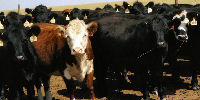
Irish Black breed fits
S.D. couple's needs
By Loretta Sorensen, Midwest Producer
Wednesday, February 13, 2008 9:38 AM CST
Valentine, Neb. - Larry and Julie Wagner weren't deterred by icy and snowy
conditions that invaded Valentine during this year's Bull Bash. The Chamberlain,
S.D., couple brings livestock to the event because they believe they can offer
producers some effective options for making the most of their resources and
time. Their Irish Black cattle and grassland management techniques have been an
effective combination for them.
"When we became involved with Bootstraps, a South Dakota program that brings
producers together to help each other, we knew we weren't accomplishing what we
wanted with our cattle, but we weren't sure what needed to change," Julie said.
"When we started analyzing and thinking about what could change, we realized we
were working more for our cattle than they were for us."
The Wagner's discovered that their overall plan for feeding and calving as well
as how they managed their grassland resources was based more on traditional
practices than their individual situation.
"Since we started looking at better management practices, we've brought in
cattle that do better on our grassland and require a lot less hands-on care,"
Julie said. "We changed the way we were using our grassland and reduced the
amount of farming equipment we own. As a result, we're spending less time with
our cows, but they're doing a lot better."
As the Wagner's began to scrutinize their production process about eight years
ago, they realized they were attempting to raise cattle with large frames and
small guts that had difficulty calving and required grain that didn't grow very
easily on the Wagner's arid land.
Small-bellied cattle "can't eat enough to survive in the environment where we
live," Julie said. "We needed cattle with big bellies so they could eat enough
grass that fatty acids and carbohydrates they need could be absorbed when that
fermented in their gut. If we wanted to avoid getting up every night and
checking our cattle, we had to have a breed that was vigorous enough to push
their calves out, lick them off and get that calf sucking so it gets the
colostrum it needs."
In their search for a more suitable breed, the Wagner's settled on Irish Black
cattle, which they found in Colorado. Among the desirable characteristics this
breed possesses are strong maternal instincts, small udders and small teeth.
"They are also very fertile and pretty docile," Julie said. "They dress out
well, about 60-70 percent. They have consistent sized ribeyes and big rumps. The
meat is also very well marbled and very tasty."
In the process of revising their production process, the Wagner's also
reorganized the way they manage their grassland. Calving in May and June made it
possible for them to make better use of the energy in their grasses.
"We use a paddock system which Larry moves so grazing is rotated," Julie said.
"The cows we're raising now have a strong desire to eat and a very large rumen.
They eat all the time, and that's a good trait for us. It means they're taking
in food and gaining all the time. By using the paddock system, we don't have to
go in and cut and bale our grass, which saves us time and money. And the cattle
are happier. They're able to graze and do what they want when they want. They're
not standing around waiting for the tractor to come in so they can eat."
An added benefit of their management system is the natural fertilizer the cattle
deposit over the grasslands as they graze. It means one less bill the Wagner's
have to pay. "Larry installed a pipeline system last summer because there were
some areas where the cattle were overgrazing the area around the water tank and
undergrazing some other areas," Julie said. "With the pipeline, we can move the
water to those areas that were undergrazed before."
The Wagner's have also found that they are less dependent on antibiotics because
their cattle are more suited to their sometimes harsh environment.
"Our quality of life is much better," Julie said. "Larry really likes working
with the cattle and since we changed from our farming practices to raising
cattle more suited to our land conditions, we've all been a lot happier."
Contact us for more info >

|